Recovery & Addictions Information

The Recovery Process & Stages
There are many stages during the recovery process, which can begin with identifying an addiction problem and learning about the various treatment options available. Our Help/Links section contains a broad range of recovery options to help visitors find the treatment that best suits their needs. These include: self evaluation, intervention services, recovery programs, mental health practitioners, detoxification, inpatient/outpatient, online treatment, message boards & chat rooms, outdoor therapy, retreats, sober housing, youth services and more. It is helpful to have as much information as possible when trying to understand a substance addiction and to find ways to break that addiction.
Our site will provide specific information on the most common drugs of abuse including their risks, health effects, treatment approaches, and prevention.
We are here to help and find you addictions treatment and support. We are dedicated to providing addicts, alcoholics, and their loved ones with answers to addiction and treatment questions, and in locating an alcohol and drug treatment center. We believe that addiction is a treatable disease, once appropriate alcohol and drug treatment is sought.
Drug and Alcohol Addiction Treatment: We understand that taking that first step to get clean and sober is monumental. We are committed to making that first
steps as simple and as painless as possible. Substance Abuse: Seeking substance abuse help in an alcohol and drug treatment center is ideal for most people struggling with the disease of addiction. If you or someone you know has failed individual efforts to get sober or has relapsed after an outpatient program than residential treatment may be the appropriate next course of action. Relapse Prevention: Many people misunderstand the importance of relapse prevention as a significant component of treatment. The work of staying sober begins once the drugs and alcohol have been cleansed from the body and once alcohol and drug rehab has been completed. The need to handle stress.
Drugs of Abuse: While every drug has its own set of signs and symptoms for withdrawal, addiction, and treatment, they do fall within specific categories. The list provided here contains the most commonly used and abused drugs and how they are treated in an alcohol and drug rehab. Each alcohol and drug treatment center has a unique population that it treats. Drug and alcohol treatment centers must be able to address core issues that impact the addict's underlying causes for using drugs or drinking. Without addressing issues pertaining to gender, sexual identity, mental health disorders or faith in an alcohol and drug rehab, the chances of staying clean and sober are diminished. Eating Disorders: Often times, people with eating disorders will develop an addiction to drugs or alcohol. The complexity of the two disorders requires focused treatment protocols and treatment should occur in a dual diagnosis alcohol and drug treatment center. Health Issues: Alcohol and drugs destroy healthy body systems, organs, brain function as well as wreak havoc on the mental and psychological well being of the user. Quality care in a drug and alcohol treatment center will address these issues. Mental Health: Issues such as depression, anxiety, panic can lead to self medicating which inevitably leads to addiction of drugs and/or alcohol. Sometimes, however, addiction can lead to a break in the healthy working of the psyche leading to the manifestation of a mental health disorder. Either way, treatment in a drug and alcohol treatment center will help. Other Addictions: There are a range of objects or behaviors that become the primary attention of a person's life. The focus becomes an addiction which may or may not include substance abuse, though often addictive behavior does lead to substance abuse. Either way, there are similarities in brain alterations, and when combined with substance abuse these addictions will respond to treatment in an alcohol and drug treatment center.
We Believe
We believe that we are going to make a difference in Greater Vancouver/Surrey & Surrounding Areas.
Different Drugs
Narcotics are opiates used to obtain a blast of euphoria, and feeling no pain. They produce significant degrees of tolerance and physical dependence, causing abusers to spend increasing time and energy obtaining and using them. Street narcotics include heroin and opium. Other narcotics that can be obtained legally and then abused are as named codeine, Demerol, methadone and morphine to name some of them. All types of narcotics have been connected with extreme withdrawal symptoms for drug abusers. Ecstasy, also known as MDMA, is a partial derivative of amphetamine and has effects similar to others in the amphetamine group. It is sometimes concidered as a hallucinogen. Almost everyone who uses "E" also use other drugs. Other names for Ecstasy are as named MBDB, MDE, MDA, MDEA and 2CB. Cocaine, a drug that's white powder, makes the person using it awake and alert, confident, tough and strong. Cocaine use is most common among men between the ages of 18 and 25. Its effects last for about 45 minutes. On the streets, cocaine may be diluted with cornstarch, talcum powder, sugar, or other drugs. Cocaine is so extremely addictive, the first time you can be addicted and hooked for life. If you don't get help then you could possibly guess when loss of control will happen. Street names for cocaine are coke, snow, blow or C. Hallucinogens, also called psychedelic drugs, create a range of perceptual distortions and various psychological symptoms. Under the influence of hallucinogens, the senses seem to be enhanced, and brilliant hallucinations occur. Street names for LSD, which is a hallucinogen, include acid,L, liquid, Liquid A, microdots, hits, paper and acid.Amphetamines and methamphetamines are stimulants commonly used by young crouds at parties and raves to enhance energy levels for clubbing and dancing. Stimulant medications can help people with A.D.D feel calmer, but they have the opposite effect on people who do not have that disorder. Street names for amphetamines include speed, bennies, crystal and crank. Rohypnol is a tranquilizer similar to Valium but around 10 times more stronger.It's an addictive drug. Rohypnol can be abused either for it's intoxicating, sedative, euphoria-producing properties, or for it's release of growth hormones, which can build muscles. Now called the date rape drug used to anaesthetize victims. Street names for Rohypnol include roofies and ropies GHB is also known as a date rape drug. It's a very dangerous drug because it depresses breathing and you can overdose easilly. The Street names for GHB include G, Liquid Ecstacy, scoop and Georgia Home Boy. Heroin is a very addictive drug of the opiate class. It is fast acting and poses many possible serious health risks. Street heroin may contain impurities that dont dissolve, it can obstruct blood vessels that lead to the brain, lungs, liver, or kidneys. Needle sharing when using street drugs is one of the leading ways to transmit HIV and other diseases. Methadone is mainly used to keep addicts from using other narcotics or to withdraw them from other narcotics. It is prescribed to people who have constant bad pain also.

http://www.drugrehab.ca/drug-alcohol-addiction.html
Drug Rehab Services is a no cost referral agency for drug and alcohol addiction. We have helped thousands of people getting help in the following services:
- Alcohol addiction
- Street drugs addiction
- Prescription drugs addiction
- Detox centers
- Private drugs and alcohol rehabs
Our goal is for you to get the best advice possible in terms of treatments available so you or a loved one get a decent life drug free.
Addiction
Addiction is an obsession or compulsion for a substance or a habit which lowers the survival potential of the person and in some cases will ruin someone’s life or even kill him. Addiction can be physical and psychological such as, street drugs, alcohol, and medication. It is normally associated with the use of substances, but is it is compulsive There are other addiction that are related to substances such as, gambling problems, computer addiction etc. With these common usages, the term addiction is used to describe a recurring compulsion by a person to engage in some specific activity, despite harmful consequences to his health, mental state or/and social life.
Street Drugs Addiction
Street drug addiction affects both physical and physiological dependence. The individual becomes addicted when his use is irrational, and out of control. He wants to stop, but cannot, even though it destroys his life, family job etc. When the person actually stops, he will end up in a period of withdrawal. It can be severe or not; depending on the drug used he was addicted to, the amount use and subsequent period of using before they ceased the drugs. Some street drug such as heroin are very hard to stop, and in some instances medical attention is safer. It is always good to get a medical okay to stop on his own or to do a social detox . After having gone through detox, it would be preferable that the recovering addict attends a drug rehab so as to fully rehabilitate him.
Prescription Drugs Addiction
Abuse of prescription drug is spreading at an alarming pace throughout Canada. The most common prescribed drugs used are the pain killers such as oxycodone, methadone, Demerol, morphine etc. The withdrawal symptoms when someone ceases to use of these particular drugs are some of the toughest and more intense. It can even be life threatening in some of them on a high dosage and prolonged usage. Always see a medical professional when you want to cease the use of a prescription drug. Most of time people cannot enter a drug rehab without proper detox from their prescription drugs.
Alcohol Addiction
Alcohol is the most common addiction in Canada after tobacco. The fact that it is legalized and accepted by our society is a major factor of the amount of individual inflicted by it. Alcohol addiction is in the condition that will result in the prolonged usage of alcoholic drinks despite health problems and negative social adverse effects. Detoxing from long term alcohol addiction is one of the toughest and life threatening substance to stop. If you drink on a daily basis and for a prolonged period, always seek medical consultation to completely cease to drink. There are also people who seek the help of other people through group counselling and other alcohol treatments.
What is addiction?
By definition, addiction is a state of being abnormally tolerant to and dependent on something that is psychologically and/or physically habit-forming.
You may ask yourself : “is my loved one actually addicted or am I over reacting?” There are methods that can help you distinguish the difference between “use”, “abuse” and “addiction”. Most drug use can be seen as abuse and most abuse soon leads to addiction, therefore, it is important that you become aware of the indicators of addiction. If the drug use/abuse hasn’t progressed to an addiction, than you can take the measures needed to keep this from occurring.
Addiction is usually defined as the compulsive use of a substance, regardless of the potentially negative social, psychological and physical consequences.
Addiction preoccupies one’s life and causes a person to neglect those behaviors and actions that help one survive and thrive. Addicts continually promise themselves and others that they will use in moderation, but break those promises and feel guilty and remorseful about their inability to control their destructive behaviors.
Generally speaking, addicts are using alcohol or other drugs to find happiness and relief from failures in unsuccessfully handling life challenges. Escaping from these failures through alcohol and other drug use are their only moments of feeling normal. They believe that life’s problems are insurmountable and they have a history of failed attempts at trying to win in life.
When a person is unable to handle different aspects of life and feels hopeless in his efforts, he will many times find relief from his disappointments with alcohol and other drugs.
Sometimes it is a simple as an inability to have fun or join in group activities, or the common idea that a person must have a couple of beers at night to unwind from the stress of work.
Naturally, someone that has a few beers in the evenings isn’t a candidate for residential treatment, but people with this profile may find themselves resorting to larger amounts of alcohol or drugs when they are confronted with an overwhelming life problem. They have taught themselves that mind altering drugs are a solution and they will resort to larger amounts of alcohol and drugs in an attempt to better confront these situations.
The moment that a person finds release from his worries with alcohol and drugs, he is very likely to become dependant on these substances to “handle” emotional challenges.
So, what indicators to you look for in determining whether someone needs alcohol and other drug treatment?
A common scenario would be a young adult, (we will call him Johnny), that is shy and any communications with peers or asking for a date, causes him a problem since he wants to be liked and be part of his community of friends, but his inability to communicate his feelings causes him to retreat from social interaction. However, Johnny finds that when he has a beer or more, or smokes some marijuana, he becomes talkative and friendly and others obviously like his interactions. He feels wrong about only being able to communicate after he is high on alcohol or other drugs, but when he attempts to be part of his group without his drugs, he stumbles and is ridiculed.
Ultimately Johnny falls in love and gets married and he tells himself that he must slow down on his use of alcohol and drugs, but whenever he does he finds himself in conflicts with his new family and he resigns himself to “needing” these substances to survive. Since Johnny’s judgment is impaired from his continual substance abuse, he creates more problems that require more able communications to handle, but he hasn’t the skills to do so. His solution has become his problem, and these actions bring on more and more problems to the point that he feels afraid of losing everything and his only moments of peace are when he is exterior to his life by being high enough to no longer care about the important issues that need his attention.
Johnny decides to seek help from his family physician, who seems to understand and prescribes him medications such as anti-anxiety drugs, like Zanax, or anti-depressants. Johnny seems better and is happier for a while, but he soon finds that these drugs work better when combined with his other drugs-of-choice and his life continues to rapidly unwind. Johnny’s wife and family can’t understand him, nor he them, so he finds friends at the bar and elsewhere who also cannot be understood by the sober and sane society.
At this point, professional help is the only way to help him understand how these substances are his problem and to help him rebuild his life free of mind altering drugs of any kind.
Now, whether or not this rebuilding of his life will be successful is predicated on the ability of the treatment modality to repair addicted lives.
Mental health and alcohol and drug treatment do not have a history of predictable successes with patients like Johnny. Everyone has heard someone say that “treatment doesn’t work”, and certainly this is true in too many cases. Johnny’s first treatment from his family doctor only hastened his decline and it is certainly true that this treatment didn’t work.
As often happens in the medical community, when treatment continues to fail, the patient or the problems get classified as incurable. This is the origin of addiction being a chronic and progressive disease, which means that it will continue throughout one’s life and will progressively get worse with time, even if a person quits alcohol or other drugs.
So, Johnny’s family does an intervention to wake him up to the fact that he is going to spend his life in jail or be dead if he doesn’t handle his addiction. If Johnny goes to one of these treatment modalities where addiction is seen as a disease, then he will be told that only one in ten of you will change your lives, that “once an addict, always an addict”. Johnny hasn’t been able to confront anything of consequence in his life and now he is given this sour pill to swallow! Most people, like Johnny, just resign themselves to the idea that they will continue to fail in life and that they are a burden to themselves and to their loved ones.
This shouldn’t be the outcome of treatment, but it many times is. Therefore, it is very important that you find treatment that works!
Addiction signs
The following are a few signs for someone who needs treatment:
- Increase or decrease in appetite;
- Changes in eating habits,
- Unexplained weight loss or gain.
- Smell of alcohol or drugs on breath, body or clothes.
- Extreme hyperactivity;
- Excessive talkativeness.
- Needle marks or bruises on lower arm, legs or feet.
- Change in overall attitude / personality with no other identifiable cause.
- Changes in friends: new hangouts, avoidance of old crowd, new friends are drug users.
- Change in activities; loss of interest in things that had previously been important.
- Decline in school or work performance; skips or is late to school or work.
- Changes in habits at home; loss of interest in family and family activities.
- Difficulty in paying attention; forgetfulness.
- Lack of motivation, energy, self-esteem, discipline, bored, "I don't care" attitude.
- Defensiveness, temper-tantrums, resentful behaviors (everything's a hassle).
- Unexplained moodiness, irritability, or nervousness.
- Violent temper or bizarre behavior.
- Unexplained silliness or giddiness.
- Paranoia -- suspiciousness.
- Excessive need for privacy; keeps door locked or closed, won't let people in.
- Secretive or suspicious behavior.
- Car accidents, fender benders, household accidents.
- Chronic dishonesty; trouble with police.
- Unexplained need for money; can't explain where money goes; stealing.
- Unusual effort to cover arms, legs, change in personal grooming habits.
- Possession of drug paraphernalia .
The above of indicators of addiction is fairly comprehensive, but there may be other signs that are unique to you or your loved one. All of these signs are indicators of someone having trouble and most of the time that involves alcohol, drugs and addiction. If you have seen these signs in yourself or someone you care about, call our counselors and let them help you discern what you need to do to help.
Also you can refer to adolescent signs for addiction .
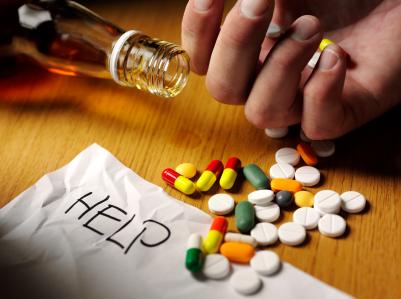
10 Warning Signs of Prescription Painkiller Dependency
Hundreds of thousands of North Americans are dependant on prescription painkillers for the relief of pain from ailments, all the way from headaches, and menstrual cramps to surgery recovery or chronic lingering pain from an injury. Unfortunately this reliance on medication can readily, and sometimes unknowingly, turns into physical and/or psychological dependence.
The alarming fact is that the most frequently prescribed opiates, such as OxyContin, Vicodin, Methadone, Darvocet, Lortab, Lorcet and Percocet, while offering relief from pain, also cause physical addiction, expressed as a need for these drugs to feel normal, and the result is that many are now challenged with chemical dependency. Here are ten warning signs to look for if you think that you or someone you know may be experiencing a dependency on these drugs.
1. Usage Increase – Everyone gains a tolerance to these pain medications, which means that larger and larger doses are required to get the same result. If somebody you know seems to be increasing his/her dose over time, this is an indication that the quantity they were taking is no longer providing them relief.
2. Change in Personality - Changes in an individual’s normal behavior can be an indicator of dependency. Shifts in energy, mood, and concentration may happen as everyday responsibilities become secondary to the urge for the relief the prescription drugs provides.
3. Social Withdrawal - Someone experiencing a dependency issue may withdraw from family, friends and other social interaction.
4. Ongoing Use - Recurring use after a medical condition has improved will result in the person needing to continue their prescriptions. The individual might talk of how they are "still feeling pain" and are still needing to be on these analgesics. They might also complain about the physicians who refused to write the prescription for one reason or another.
5. Time Spent on Obtaining Prescriptions - A dependant individual will spend increasing amounts of time in driving great distances and visiting multiple doctors to obtain their medicine. Look for indicators that they seem preoccupied with a quest for medication, demonstrating that the drug has become their top priority.
6. Change in Daily Habits and Appearance - Personal hygiene may diminish as a consequence of a drug addiction. Sleeping and eating habits vary, and an individual may have a constant cough, runny nose and/or red and glazed eyes.
7. Neglects Responsibilities - A dependent individual may call in sick to work more frequently, and neglect household chores and bills.
8. Increased Sensitivity - Usual sights, sounds and emotions might become overly stimulating, even to the extent that they may experience hallucinations.
9. blackouts and Forgetfulness – You may find that appointments are frequently forgotten or they may even experience blackouts, where they have no memory of obvious events.
10. Defensiveness - When trying to hide a drug dependency, abusers can become very defensive if they think their secret is being discovered. They lash out at simple requests or questions about their drug use.

Books of Dr. Abraham Low, MD.
The Recovery International Method is based on the following self-help books written by Abraham Low, MD:
- Mental Health Through Will-Training
- Manage Your Fears Manage Your Anger
- Selections From Dr. Low's Works
- The Wisdom of Dr. Low - Words to Live By
Mental Health Through Will-Training and Selections From Dr. Low's Works are also available on audio CD.
Choose the book below to get more information or go ahead and order now.
More Details of the Books
http://www.bcrscna.bc.ca/main/info.php
Information About NA (2009)*Link to pamphlet*
Development
Program
Service Organization
Organizational Philosophy
Cooperating with Narcotics Anonymous
Membership Demographics
Years Drug Free
Quality of Life Improvement Areas
Development
Narcotics Anonymous sprang from the Alcoholics Anonymous Program of the late 1940s, with NA meetings first emerging in the Los Angeles area of California, USA, in the early 1950s. The NA program started as a small US organization that has grown into one of the world’s oldest and largest international organizations of its type. For many years, NA grew very slowly, spreading from Los Angeles to other major North American cities and Australia in the early 1970s. Within a few years, groups had formed in Brazil, Colombia, Germany, India, the Irish Republic, Japan, New Zealand, and the United Kingdom. In 1983, Narcotics Anonymous published its self-titled Basic Text book, which contributed to its tremendous growth; by year’s end, NA had grown to more than a dozen countries and had 2,966 meetings.
Today, Narcotics Anonymous is well established throughout much of North and South America, Western Europe, Australia, the Middle East, New Zealand and Eastern Europe. Newly formed groups and NA communities can be found scattered throughout the Indian subcontinent, Africa, and East Asia. Today the organization is truly a worldwide multilingual multicultural fellowship with more than 58,000 weekly meetings in 131 countries*. Narcotics Anonymous books and information pamphlets are currently available in 39 languages, with translations in process for 16 languages.
*As of May 2010
Return to top
Program
NA’s earliest self-titled pamphlet, known among members as "the White Booklet," describes Narcotics Anonymous this way:
"NA is a nonprofit fellowship or society of men and women for whom drugs had become a major problem. We … meet regularly to help each other stay clean. … We are not interested in what or how much you used ... but only in what you want to do about your problem and how we can help."
There are no social, religious, economic, racial, ethnic, national, gender, or class-status membership restrictions. There are no dues or fees for membership; most members regularly contribute in meetings to help cover the expenses incurred for the rent of facility space.
Narcotics Anonymous is not affiliated with other organizations, including other twelve step programs, treatment centers, or correctional facilities. As an organization, NA does not employ professional counselors or therapists nor does it provide residential facilities or clinics. Additionally, the fellowship does not offer vocational, legal, financial, psychiatric, or medical services. NA has only one mission: to provide an environment in which addicts can help one another stop using drugs and find a new way to live.
In Narcotics Anonymous, members are encouraged to comply with complete abstinence from all drugs including alcohol. It has been the experience of NA members that complete and continuous abstinence provides the best foundation for recovery and personal growth. NA as a whole has no opinion on outside issues, including prescribed medications. Use of psychiatric medication and other medically indicated drugs prescribed by a physician and taken under medical supervision is not seen as compromising a person’s recovery in NA.
Return to top
Service Organization
The primary service provided by Narcotics Anonymous is the NA group meeting. Each group runs itself based on principles common to the entire organization, which is expressed in NA’s literature.
Most groups rent space for their meetings in buildings run by public, religious, or civic organizations. Individual members lead the NA meetings while other members participate by sharing about their experiences in recovering from drug addiction. Group members also work together to perform the activities associated with running a meeting.
In a country where Narcotics Anonymous is a relatively new and emerging fellowship, the NA group is the only level of organization. In places where a number of Narcotics Anonymous groups have had the chance to develop and stabilize, groups elect representatives to form a local service committee. These local committees usually offer a number of services. Included among them are:
- distribution of NA literature;
- helpline information services;
- presentations for treatment and healthcare staff , civic organizations, government agencies, and schools;
- presentations to acquaint treatment or correctional facility clients with the NA program; and
- maintaining NA meeting directories for individual information and for any interested person.
In some countries, especially the larger countries or those where Narcotics Anonymous is well established, a number of local/area committees have come together to create regional committees. These regional committees handle services within their larger geographical boundaries while the local/ area committees operate local services.
An international delegate assembly known as the World Service Conference provides guidance on issues affecting the entire organization. Primary among the priorities of NA’s world services are activities that support emerging and developing NA communities and the translation of Narcotics Anonymous literature. For additional information, contact the NA World Services headquarters in Los Angeles, California. The mailing address, telephone number, fax number, and website address appear at the end of this pamphlet.
Return to top
Organizational Philosophy
Narcotics Anonymous strives to be entirely self-supporting through member contributions and does not accept financial contributions from non-members. Based on the same principle, groups and service committees are administered by NA members, for members.
Narcotics Anonymous neither endorses nor opposes any other organization’s philosophy or methodology. NA’s primary focus is in providing a recovery environment whereby drug addicts can share their recovery experiences with one another. By remaining free from the distraction of controversy, NA is able to focus all of its energy on its particular area of purpose.
Return to top
Cooperating with Narcotics Anonymous
Although certain traditions guide its relations welcomes the cooperation of those in government, the clergy, treatment and healthcare professions, criminal justice organizations and private voluntary organizations. NA’s nonaddict friends have been instrumental in getting Narcotics Anonymous started in many countries and helping NA grow worldwide.
NA strives to cooperate with others interested in Narcotics Anonymous. Our more common cooperation approaches are: providing contact information, disseminating recovery literature, and sharing information about recovery. Additionally, NA members are often available to provide presentations for treatment centers and correctional facilities, offering information about the NA program to the professional staff and sharing with addicts otherwise unable to attend community-based meetings.
Return to top
Membership Demographics
To offer some general informal observations about the nature of the membership, and the effectiveness of the program, the following observations are believed to be reasonably accurate.
The socioeconomic strata represented by the NA membership vary from country to country. Usually, members of one particular social or economic class start and sustain most developing NA communities worldwide, but as their fellowship development activities become more effective, the membership becomes more broadly representative of all socioeconomic backgrounds.
All ethnic and religious backgrounds are represented among NA members. Once a developing NA community reaches a certain level of maturity, its membership generally reflects the diversity or homogeneity of the background culture.
Membership in Narcotics Anonymous is voluntary; no attendance records are kept either for NA’s own purposes or for others. Because of this, it is sometimes difficult to provide interested parties with comprehensive information about NA membership. There are, however, some objective measures that can be shared based on data obtained from members attending one of our world conventions; the diversity of our membership, especially ethnic background, seems to be representative of the geographic location of the survey. The following demographic information was gathered from a survey completed by approximately 11,723 NA members. The survey was made available at the 2009 World Convention of NA in Barcelona, Spain, in our international journal, The NA Way Magazine, and on our website:
- Gender: 58% male, 42% female.
- Age: 2% 20 years old and under, 14% 21–30 years old, 22% 31–40 years old, 34% 41–50 years old, 24% 51-60 years old, and 4% over 60 years old.
- Ethnicity: 73% Caucasian, 10% African-American, 10% Hispanic, and 7% other.
- Employment status: 61% employed full-time, 10% employed part-time, 11% unemployed, 7% retired, 4% homemakers, and 7% students.
- Continuous abstinence/recovery: ranged from less than one year up to 40 years, with a mean of 9.1 years.
Years Drug Free

Return to top
Quality of Life Improvement Areas

The 2009 Membership Survey marks the second time that members were asked to respond to areas of their lives that have improved with NA attendance. We initially asked this question in 2007 and found the responses informative about recovery in NA. The two areas that received overwhelming improvement were Family Relationships where 92% of our members stated enrichment and Social Connectedness was realized by 88% of the respondents. NA’s literature states that active addiction is marked by increased isolation and destruction with relationships. Recovery in NA has helped survey respondents to repair the damage in their lives from drug addiction.
Please Contact Us If you need information posted on this page.